
By Hafiz Khalid, Director of Product Marketing at XP Power
Over the years, through observations in the field and conversations with design engineers, four challenges regularly present themselves when integrating high-voltage DC-DC power modules into critical, long-term applications. The most important criterium is to define the requirements of the power module correctly, then consider the converter’s accuracy under various conditions, the surrounding circuitry required and where it should be placed relative to the converter, and how to integrate the module into the final design.
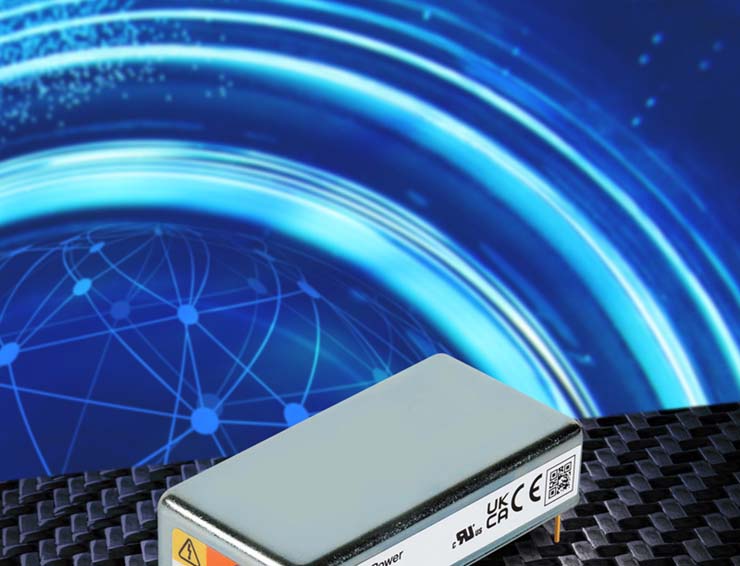 Defining key parameters
When looking for a high-voltage power module, a critical starting point in the design-in process is to define its requirements accurately. Depending on the application, this covers all the significant parameters of the module. Therefore, the first step is to understand the input and output conditions in the application. The input voltage and its accuracy define the module’s necessary line regulation and protection requirements. In most cases, the load and loading conditions are complex but, once known, help define the basic parameters of the module, such as voltage, current, and polarity. A typical photomultiplier tube, for instance, may require 1200Vdc at a few micro-Amps of current. Also, knowing what signals are available to control and monitor the module so that it operates correctly and safely enhances the end application.
There are also environmental conditions to consider. For example, designers must pay attention to elevated operating temperatures or moisture levels if the end application is in equipment destined for installation in the tropics. So too, are space constraints; generally, the focus on equipment, from handheld devices to benchtop test & measurement instruments, is to make them as small as possible or pack more functionality in the same space.
Last but not least are the required agency approvals for the end equipment. Selecting a pre-approved module to the relevant standards eases design-in and saves time and money. A typical example is the UL/IEC/EN 61010 standard for analytical instruments.
Assessing accuracy
Once the requirements of the power module have been defined correctly, its overall accuracy needs to be assessed. Accuracy can be affected by variations in the input voltage, loading conditions, operating temperature, and various other environmental factors. For example, consider the output voltage tolerance, which defines any variation from the specified voltage. There is also the setpoint accuracy of the module to consider, which confirms its ability to achieve the set point using the control voltage.
Again, line and load regulation specify the module’s ability to keep the output voltage within certain limits regardless of the input or load variations. Ripple and noise can also impact the accuracy of the module. For certain power module applications, such as analytical instrumentation, output stability over time is essential to ensure repeatability. For example, this stability over time becomes critically important in mass spectrometry, where equipment can run for several hours. Here, the instrument must deliver the same results if the same sample goes through twice. Changes in ambient temperature can also affect the output voltage. Usually, the module’s long-term drift and temperature coefficient are specified on the datasheet.
Surrounding circuitry
As opposed to low-voltage or digital circuit boards, designing a high-voltage circuit board requires particular attention to the surrounding componentry, especially on the secondary side of the module. Designers should keep a close eye on the creepage and clearance distances from low-voltage circuitry and ensure there are no ground planes, silk screens, or plated holes in the high-voltage area.
If isolation is required, consider adding slots on the board. It is also good practice to avoid sharp edges on the pads on the circuit board and consider using a conformal coating or other insulating materials if required. Importantly, when specifying components for use in high-voltage applications, please note their voltage/power ratings and derating. Voltage/temperature coefficients and the thermal performance of the components themselves also play a significant role when designing high-voltage circuitry.
Electrical module integration
There are various built-in features to look out for when selecting a high-voltage power module that aid handling and ease integration, simplifying and shortening design times. For example, many modules feature undervoltage and overvoltage protection circuitry to protect from glitches on the input line. There may also be circuitry that prevents mis-programming of the control voltage, protecting the module from inadvertent damage.
On the secondary side, arc protection prevents damage to the module due to arching events in the applications. In addition, overcurrent and short circuit protection circuitry provides safety for the module and application in case of a fault condition, such as an overload or short circuit. Likewise, thermal shutdown protects the module if the temperature rises above its specified operating temperature range. There are various thermal shutdown mechanisms; regardless, most power modules recover once the over-temperature condition is removed.
Controlling and monitoring the module
The digital compatibility of the signals used to control and monitor the power module defines the circuitry required. For example, many power modules feature digital-to-analog compatible signals, making it easier to control the high voltage. General lab equipment, such as digital multimeters and scope probes, are often limited to 1kVdc, which makes measuring the high voltage of the power module a challenge. However, power modules with digitally compatible monitor signals negate the need for using an instrument altogether, making it much easier for the design engineer.
Mechanical module integration
On a practical level, there are many more things to consider when integrating a high-voltage power module into an application than a low-voltage module. In many cases, the input and output pins are solderable, but other connection types are also available. Also, knowing the number, position, and type of pins is important to ensure safe routing of the PCB traces and compliance with the safety requirements, such as creepage and clearance.
Knowing the physical size of the module is also essential, both the footprint and height. Its overall weight is also a key consideration, especially if the designer knows that the end application will likely encounter shock/vibration loads, however infrequent. Finally, if additional heatsinking is required on the module, this must be factored into any size/weight considerations and whether affixing it is compatible with the production process.
Conclusion
The start of the design-in journey is recognizing the need for a highly reliable, high-voltage DC-DC converter with precise output specifications.



Leave a Reply