
Intersil Corporation introduced the industry’s first radiation tolerant 3.3V controller area network (CAN) transceivers that are fully QML-V qualified and compliant with the ISO11898-2 physical layer standard. The three new ISL7202xSEH CAN transceivers provide reliable serial data transmission between a CAN controller and CAN bus at speeds up to 1Mbps. Up to 120 of Intersil’s ISL7202xSEH transceivers can be connected to a single CAN bus to reduce cabling/harness size, weight and power (SWAP) costs. This weight and mass reduction of up to 18% allows system engineers to add millions of dollars in satellite functionality, and eliminate the extra cabling and tradeoffs associated with current point-to-point interface solutions.
The ISL72026SEH, ISL72027SEH and ISL72028SEH 3.3V CAN transceivers deliver ultra-high performance in the most demanding environments by leveraging Intersil’s proprietary silicon on insulator process, which provides single event latch-up (SEL) and single event burn-out (SEB) robustness in heavy ion environments. With the emergence of all-electric propulsion satellites that maximize payload but take longer to reach final orbit, customers require higher total dose testing for mission assurance. Intersil’s CAN transceivers are low dose rate tested up to 75krad on a wafer-by-wafer basis, and apply single event transient (SET) mitigation techniques to reduce system level bit error rates, providing predictable performance. They are also “cold spare” redundant capable, allowing the connection of additional unpowered transceivers to the CAN bus. This mission critical capability maximizes system life.
The ISL7202xSEH family offers a number of unique features: The ISL72026SEH includes a loopback test capability that allows node diagnostics and reporting while the system is transmitting data. It also includes a listen mode feature that powers down the driver circuitry while keeping the receiver active to listen for data on the bus, and then activates the driver after data is received. The ISL72027SEH also offers split termination output using the Vref pin to provide a Vcc/2 output reference. This improves network electromagnetic compatibility and stabilizes the bus voltage, preventing it from drifting to a high common-mode voltage during inactive periods. The ISL72028SEH includes a low power shutdown mode that switches off the driver and receiver to draw 50uA for power conservation.
“Implementing the full CAN bus protocol within a spacecraft will be a major improvement over previously used interface protocols,” said Gianluca Furano, on-board computer engineer at the European Space Agency. “Once we adapt a total CAN bus protocol, we expect satellites will achieve sensible mass and power reductions and manufacturers will have the ability to add several millions of dollars of functional capability.”
“Our space flight customers are anxious to replace their point-to-point data transmission solutions with space-qualified, radiation tolerant CAN transceivers,” said Philip Chesley, senior vice president of Precision Products at Intersil. “The ISL7202xSEH devices provide superior performance and meet the mission assurance needs of their satellite payload systems.”
Key Features and Specifications
Electrically screened to SMD 5962-15228, and compatible with ISO11898-2
Delivers 4kV human body model (HBM) ESD protection on all pins
3.0V to 3.6V supply range, -7V to +12V common-mode input voltage range, 5V tolerant logic inputs, and bus pin fault protection to +/-20V terrestrial and +/-18V in orbit
Cold spare powered down devices do not affect active devices operating in parallel
Three selectable driver rise and fall times
Glitch free bus I/O during power-up and power-down
Full fail-safe receiver: open, short, terminated/undriven
Hi Z input allows for 120 nodes on the bus and data rates up to 1Mbps
Low quiescent supply current of 7mA
Thermal shutdown
Low dose rate (0.01rad(Si)/s) radiation tolerance of 75krad(Si)
SEL/B immune up to LET 60MeV.cm2/mg
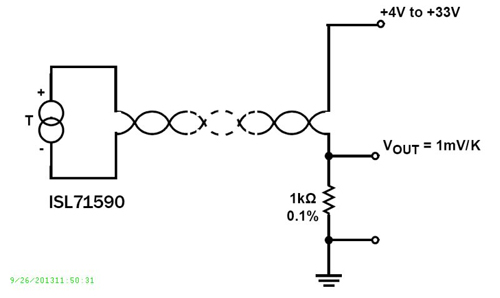
The ISL7202xSEH 3.3V CAN transceivers can be combined with the ISL71590SEH temperature sensor, ISL71090SEH or ISL71091SEH voltage references, ISL70444SEH, ISL70417SEH, ISL70218SEH, and ISL70227SEH operational amplifiers, ISL71840SEH multiplexer, and LDO regulators such as the ISL75051SEH and ISL75052SEH to support telemetry data handling for satellite payload systems with superior radiation tolerant performance.
Availability
The ISL72026SEH, ISL72027SEH and ISL72028SEH 3.3V CAN transceivers are available now in 8-lead ceramic flatpack packages, and are U.S. Department of Commerce export approved under classification 5A991.b. They are also available in die form. An evaluation board for each CAN transceiver — ISL72026SEHEVAL1Z, ISL72027SEHEVAL1Z and ISL72028SEHEVAL1Z — is available to evaluate device features and performance.
Intersil
www.intersil.com

Leave a Reply