

Power-on glitches and system malfunctions are a special challenge as rail voltages drop, but the right ICs eliminate the problem. Experienced engineers know that one of the riskiest times for a system is when power is applied. Depending on time constants and how smoothly and quickly the power rail comes up to nominal, the different […]
FAQ
MYTH #2: e-mode devices have no Qrr
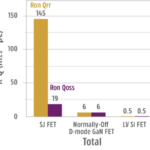
(Editor’s note: check out the full article, “The fundamental advantages of D-Mode GaN in cascode configuration,” and get the full technical story behind these “busted” myths.) Reality: When switching from reverse conduction to off-state, the reverse recovery charge accounts for not only bipolar transport minority carriers recombination but also the formation of the space-charge region, […]
MYTH #3: Cascode GaN oscillates.
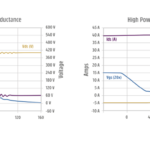
(Editor’s note: check out the full article, “The fundamental advantages of D-Mode GaN in cascode configuration,” and get the full technical story behind these “busted” myths.) Reality: Cascode GaN has a lot of gains. And gain is a wonderful thing, leading to very fast switching. It needs, however, to be harnessed properly to achieve the […]
MYTH #1: Si MOSFETs add on-state resistance and reverse recovery charge
(Editor’s note: check out the full article, “The fundamental advantages of D-Mode GaN in cascode configuration,” and get the full technical story behind these “busted” myths.) Reality: In cascode GaN technology, the GaN chip bears most of the off-state high voltage (> 90%). The Si MOSFET needs only to bear a few 10s of volts. […]
What does power dissipation mean?

by James Davis, edukatronik.com Power dissipation is a crucial phenomenon in the field of electronics. It refers to the amount of energy that is transformed into heat during the operation of a device or circuit. This process is unavoidable and can be a significant concern, especially in applications where energy efficiency is paramount. That is […]
Bidirectional power for EVs: the practical and creative opportunities using power modules
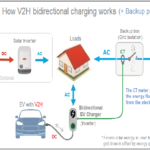
Given the coexistence of 400 V and 800 V EVs on the road, what options are there to harmonize these two distinct architectures? We all know the race is on for electrification, whether through government mandates and incentives or consumers demanding green transportation solutions with higher performance, longer range, and more features. Car makers are […]
The fundamental advantages of D-Mode GaN in cascode configuration
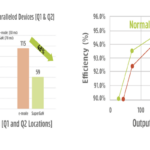
Inarguably, GaN power semiconductors are a hot topic in power electronics. Two transistor variations prevail today: cascode GaN and e-mode GaN. When confronted with the choice, the debate at times inexplicably leans toward e-mode. In reality, cascode GaN proves to be a fundamentally superior platform in performance, reliability, versatility, manufacturability, and practical application. The reasoning […]
The lifetime thing and the question: “How long do power electronics last?”
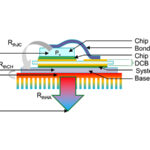
Determining the durability and reliability of power electronics starts with strategies for estimating the lifespan. In mechanics, it is obvious that moving parts wear under friction, and the countermeasure is also clear: lubrication. Lubrication reduces friction and thus wear, or vice versa, extending service life. Power electronic components are also subject to wear. Since this […]
Trends for GaN adoption in xEV and clean energy power systems

Gate drivers hold the key for efficient wide bandgap semiconductor adoption on the road to sustainability. Innovative companies are developing disruptive new technologies that move the world towards a safer and more sustainable future. Wide bandgap semiconductors, notably GaN and SiC transistors, are a present-day example of a rapidly emerging and disruptive technology that dramatically […]
What are edge-based and OOK digital isolator architectures?
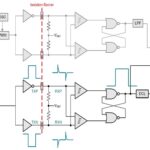
Edge-based and on-off-keying (OOK) are common communication architectures used in digital isolators. The choice between the two involves tradeoffs, mostly in data rates versus power consumption. Depending on the implementation, there can also be tradeoffs related to noise and transient response and common mode transient immunity (CMTI). This FAQ reviews how edge-based and OOK architecture […]