
Leland Teschler, Executive editor
lteschler@wtwhmedia.com
On Twitter @ DW_LeeTeschler
A year ago, if your cocktail party conversations had included the idea of adding germicidal lights to a connected car, you probably would have elicited facial expressions suggesting you’d lost your mind. Today, the same idea would be more likely to engender a lot of head nodding.
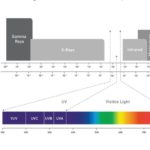
Who knew that disinfection would be a topic in the auto industry just as hot as self-driving vehicles? COVID-19 has  sparked a lot of interest in using ultraviolet lighting to disinfect surfaces and to cleanse the air of microbes. The spotlight is on UV-C radiation, with a wavelength of between 200 and 280 nm. At a wavelength of 253.7 nm, UV breaks down the DNA of micro-organisms (RNA in the case of COVID-19) and renders them harmless.
UV-C has long been used in medical settings. Now we are beginning to see it in trains, planes, and automobiles. One example is the Honeywell UV Cabin System for airliners. Roughly the size of an aircraft beverage cart, it has UV-C-equipped arms that extend over the top of seats and sweep the cabin. There are also UV-C lights marketed to sanitize ambulance interiors.
It looks as though ordinary passenger vehicles will have UV-C sanitizing options. One being discussed by automotive developers is a cell phone charger in the car console that also disinfects charging phones. A similar idea turns the console compartment now used for storing items such as sunglasses and chewing gum into a chamber illuminated by UV-C.
But you probably won’t be seeing UV-C dome lights or similar applications that bathe entire passenger compartments in germicidal light. One problem is that UV-C tends to cause skin cancer if you’re exposed to it and cataracts if you look at it. The light also tends to age the plastic surfaces common to automotive interiors. So it’s vehicular uses will probably be limited to confined areas bounded by surfaces that UV-C won’t degrade.
However, there’s one notable area where UV-C might bring benefits: disinfecting passenger compartment air. Evidence indicates that the coronavirus responsible for the COVID-19 pandemic can be transmitted via aerosols—droplets less than 5 μm in diameter. Aerosol particles are much smaller than those spewed by coughing and sneezing. And aerosols travel a lot farther. Research suggests that large droplets quickly fall out of the air within about two meters. In contrast, researchers have calculated that one minute of loud speaking generates upwards of 1,000 COVID-19 aerosols that remain airborne for at least eight minutes.
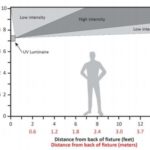
Though the idea sounds encouraging, there are problems with using UV-C for cleansing air in passenger compartments. For one thing, its harmful effects on humans and plastic surfaces necessitates its placement in air ducts. But tests by the Illumination Engineering Society reveal that for effective disinfection, the duct must move a lot of air, and the UV-C must be relatively intense. It’s not clear that existing vehicle air systems have the necessary output. And the only UV-C sources with enough intensity to do the job are the traditional mercury lamps which have lifetimes shorter than what’s optimal for the auto industry. (UV-C LEDs have recently become practical, but they typically put out too few lumens to disinfect air.)
If UV-C air systems become automotive technology, they’ll likely debut in mass-transit settings. But it’s possible the first “autonomous” moniker for production vehicles may end up referring to autonomous disinfection.

Leave a Reply