• Skip to primary navigation
  • Skip to main content
  • Skip to primary sidebar
  • Skip to footer
  • Subscribe
  • Advertise

Power Electronic Tips

Power Electronic News, Editorial, Video and Resources

  • Products
    • Power Supplies
    • AC-DC
    • DC-DC
    • Battery Management
    • Capacitors
    • Magnetics
    • MOSFETS
    • Power Management
    • RF Power
    • Resistors
    • Transformers
    • Transistors
  • Applications
    • 5G
    • AI
    • Automotive
    • EV Engineering
    • LED Lighting
    • Industrial
    • IoT
    • Wireless
  • Learn
    • eBooks / Tech Tips
    • EE Training Days
    • FAQ
    • Learning Center
    • Tech Toolboxes
    • Webinars & Digital Events
  • Resources
    • Design Guide Library
    • Digital Issues
    • Engineering Diversity & Inclusion
    • LEAP Awards
    • Podcasts
    • White Papers
  • Video
    • EE Videos & Interviews
    • Teardown Videos
  • EE Forums
    • EDABoard.com
    • Electro-Tech-Online.com
  • Engineeering Training Days
  • Newsetter Subscription

SMD power inductors handle high temperatures, high currents

September 25, 2020 By Redding Traiger Leave a Comment

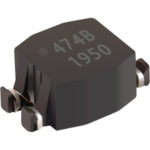
Sumida surface mount automotive inductor

Sumida continues the expansion of its AEC-Q200 qualified SMD inductors with the introduction of the CDEP13D**/T150 line. Consisting of ten standard types and ten high-power types, the new devices offer a combination of four key benefits, when compared to many other inductors. These are high temperature, high current, high-insulation voltage, and magnetic shielding.

Inductance values range from 0.8 to 22 µH, with saturation current of up to 32 amps. Measuring 13.5 x 13.5 x 10 mm, the new products are an outgrowth of the CDEP15D**/T150 line, which measures 2mm larger and offers saturation current of up to 50.4 µH. For durability, core and windings can withstand a voltage of up to 120 Vdc.

The full operating temperature range is -40 °C to 150 °C (including coil’s self-temperature rise) and both product families are qualified to the Automotive AEC-Q200 reliability test requirements. The 150 °C temperature satisfies most under-hood automotive application requirements, while the Mn-Zn (Manganese-Zinc) ferrite core has high-magnetic permeability and low power losses at the higher switching frequencies now found in automotive power circuits. High-frequency performance is further enhanced by the application of flat coil windings, which counteract “skin-effect,” and lower DC resistance. Flat-coil windings are also much more space-efficient than round-wire coils, helping to significantly reduce device size.

The part geometry provides very effective magnetic shielding, which is of growing importance because of the push towards smaller, more densely-packed automotive circuits. Unchecked, radiated EMI/RFI can also affect the operation of other circuits nearby.

Popular automotive applications for these inductors include: LED Headlight Driver Modules, Adaptive Driving Beam (ADB), Adaptive LED Boards, Daylight Running Light (DRL) systems, Pulse Width Dimming (PWD) circuits, AFS (Adaptive Front-lighting System), Hybrid Engine Controls, Powertrain Control Modules (PCM) or any high-reliability application that must tolerate a wide temperature range.

CDEP13D**/T150 Series and CDEP15D**/T150 power inductors are in-stock at Digi-Key.
You may also like:


  • Current-compensated dual choke filter inductors handle high currents
  • magnetics
    Comparing magnetic cores for power inductors
  • molded power inductors
    What do molded power inductors bring to high efficiency, compact…
  • inductor cores
    How new inductor cores meet demands for smaller, quieter, and…

Filed Under: ac power sources/frequency converters, Inductor, Power Management, power modules, Power Supplies Tagged With: sumida

Reader Interactions

Leave a Reply

You must be logged in to post a comment.

This site uses Akismet to reduce spam. Learn how your comment data is processed.

Primary Sidebar

Featured Contributions

Vertical power delivery reduces losses in AI processor designs

Protecting Ethernet interfaces in telecommunications applications against common high energy surges

Ionic cooling: a silent revolution in thermal management

Robust design for Variable Frequency Drives and starters

Meeting demand for hidden wearables via Schottky rectifiers

More Featured Contributions

EE LEARNING CENTER

EE Learning Center

EE TECH TOOLBOX

“ee
Tech Toolbox: Aerospace & Defense
This Tech Toolbox dives into the technical realities of modern defense, exploring how MBSE is streamlining aerospace design and what’s next for radar and electronic warfare.

EE ENGINEERING TRAINING DAYS

engineering
“power
EXPAND YOUR KNOWLEDGE AND STAY CONNECTED
Get the latest info on technologies, tools and strategies for EE professionals.
“bills

RSS Current EDABoard.com discussions

RSS Current Electro-Tech-Online.com Discussions

  • EasyEda program has a major bug
  • PCB manufacturing issues
  • Convenient audio FFT module?
  • Mystery amp noise - ??
  • SDCC Array Access In Timer 0 Interrupt Handler

Footer

EE World Online Network

  • 5G Technology World
  • EE World Online
  • Engineers Garage
  • Analog IC Tips
  • Battery Power Tips
  • Connector Tips
  • EDA Board Forums
  • Electro Tech Online Forums
  • EV Engineering
  • Microcontroller Tips
  • Sensor Tips
  • Test and Measurement Tips

Power Electronic Tips

  • Subscribe to our newsletter
  • Advertise with us
  • Contact us
  • About us

Copyright © 2026 · WTWH Media LLC and its licensors. All rights reserved.
The material on this site may not be reproduced, distributed, transmitted, cached or otherwise used, except with the prior written permission of WTWH Media.

Privacy Policy