

In the ever-evolving landscape of electric vehicle (EV) technology, the pursuit of faster charging speeds and increased efficiency stands as a paramount goal. As significant improvements in EV technology continue in tandem with growing government support, the demand for electric vehicles has never been higher. However, amidst this drive for progress, one critical aspect that […]
Thermal management
IP68-rated DC fans offer enhanced protection for harsh environments
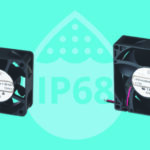
CUI Devices’ Thermal Management Group announced the addition of IP68-rated fan models to its line of dc axial fans. These waterproof dc fans offer complete protection against moisture and dust, making them ideal for a range of harsh environments such as refrigeration, HVAC, medical, and more. The IP68-rated fans feature dual ball bearing construction, square frame sizes of […]
TTape: A simple way to monitor Li-ion battery-pack temperature

A set of temperature-triggered switches alerts you to hot batteries. Li-ion batteries can get hot, which can cause failures or worse in the products they power. Thus, it’s important to monitor their temperature and act before damage occurs. You can monitor temperature with a set of thermocouples, scan them, and write software to produce an […]
Surface-mount low-current circuit breaker doubles as a thermal cutoff

Bourns, Inc. announced its smallest surface mount mini-breaker TCO device. The Bourns Model SW mini-breaker has a 4.7 mm x 2.8 mm footprint with a height of just 0.94 mm. Designed to control abnormal, excessive temperature virtually instantaneously, up to rated limits, the Model SW mini-breaker is an optimal overtemperature protection solution for a wide range of applications that include […]
Chip cooler cools several components simultaneously
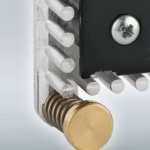
The new chip cooler was specially developed to meet the cooling requirements of processors. The new HXB100 chip cooler was designed to enable the cooling of several components simultaneously. This saves both space and costs. The innovative chip cooler has an astonishingly light and compact construction. It measures a mere 100 x 75 x 13 […]
Micro multistate thermoelectric coolers boosts cooling capacity by 10 percent

Laird Thermal Systems has developed the new OptoTEC MSX Series of micro multistage thermoelectric coolers and the capability to integrate them into various optical packages, including widely used TO-39, TO-46, or TO-8, creating advanced Optical Thermoelectric Assemblies (TEAs). The MSX Series utilizes advanced ceramic materials, proprietary solder bonding techniques, and next-generation thermoelectric materials to boost […]
The crucial role of thermal interface materials

As electrical engineers, we are always searching for new and innovative ways to optimize the performance of our devices. However, one often overlooked aspect of electronic design is the management of heat. Excessive heat can have disastrous effects on the performance, reliability, and longevity of electronic components. This is where Thermal Interface Materials (TIMs) come […]
Fanless 300-W supplies output up to 58 Vdc

The Vox Power VCCS300 power supply series delivers a silent 300 Watts of continuous output power in a rugged and miniature 4” x 2” x 1.61” package, which can be cooled using conduction, convection, or forced air cooling techniques. VCCS300 is the ultimate power solution for applications where rugged reliability, high efficiency, silent operation and […]