• Skip to primary navigation
  • Skip to main content
  • Skip to primary sidebar
  • Skip to footer
  • Subscribe
  • Advertise

Power Electronic Tips

Power Electronic News, Editorial, Video and Resources

  • Products
    • Power Supplies
    • AC-DC
    • DC-DC
    • Battery Management
    • Capacitors
    • Magnetics
    • MOSFETS
    • Power Management
    • RF Power
    • Resistors
    • Transformers
    • Transistors
  • Applications
    • 5G
    • AI
    • Automotive
    • EV Engineering
    • LED Lighting
    • Industrial
    • IoT
    • Wireless
  • Learn
    • eBooks / Tech Tips
    • EE Training Days
    • FAQ
    • Learning Center
    • Tech Toolboxes
    • Webinars & Digital Events
  • Resources
    • Design Guide Library
    • Digital Issues
    • Engineering Diversity & Inclusion
    • LEAP Awards
    • Podcasts
    • White Papers
  • Video
    • EE Videos & Interviews
    • Teardown Videos
  • EE Forums
    • EDABoard.com
    • Electro-Tech-Online.com
  • Engineeering Training Days
  • Newsetter Subscription

MYTH #2: e-mode devices have no Qrr

October 4, 2023 By Davide Bisi, Umesh Mishra, Philip Zuk, Transphorm, Inc. Leave a Comment

(Editor’s note: check out the full article, “The fundamental advantages of D-Mode GaN in cascode configuration,” and get the full technical story behind these “busted” myths.)

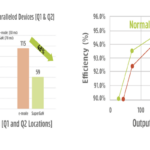
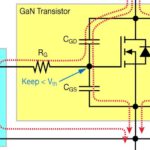
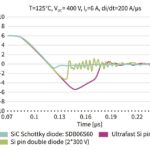
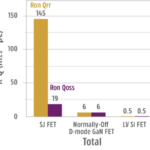
Reality: When switching from reverse conduction to off-state, the reverse recovery charge accounts for not only bipolar transport minority carriers recombination but also the formation of the space-charge region, which is effectively equivalent to the output charge (Qoss). It’s true that GaN HEMTs have no reverse conduction bipolar transport, but they nevertheless do have output capacitance that needs to be charged during reverse recovery. In a nutshell, Qrr = Qoss. Qrr cannot be zero. Myth busted!

More myths
Myth #1: Si MOSFETs add-on state resistance reverse recovery charge
Uncover what chip really handles the majority of off-state high voltage — and which one contributes less than 10 percent of the total cascode resistance.
Myth #3: Cascode GaN oscillates
Read how following standard design principles enhances performance and suppresses oscillations and EMI.
You may also like:


  • MYTH #3: Cascode GaN oscillates.

  • MYTH #1: Si MOSFETs add on-state resistance and reverse recovery…

  • The fundamental advantages of D-Mode GaN in cascode configuration

  • Dispelling Myths: Don’t believe it when they say you need…

  • What’s the difference between Shockley and Schottky diodes?

Filed Under: FAQ Tagged With: FAQ, Transphorm Inc.

Reader Interactions

Leave a Reply

You must be logged in to post a comment.

This site uses Akismet to reduce spam. Learn how your comment data is processed.

Primary Sidebar

Featured Contributions

Protecting Ethernet interfaces in telecommunications applications against common high energy surges

Ionic cooling: a silent revolution in thermal management

Robust design for Variable Frequency Drives and starters

Meeting demand for hidden wearables via Schottky rectifiers

The case for vehicle 48 V power systems

More Featured Contributions

EE LEARNING CENTER

EE Learning Center

EE TECH TOOLBOX

“ee
Tech Toolbox: Aerospace & Defense
Modern defense and aerospace systems demand unprecedented sophistication in electronic and optical components. This Tech ToolBox explores critical technologies reshaping several sectors.

EE ENGINEERING TRAINING DAYS

engineering
“power
EXPAND YOUR KNOWLEDGE AND STAY CONNECTED
Get the latest info on technologies, tools and strategies for EE professionals.
“bills

RSS Current EDABoard.com discussions

RSS Current Electro-Tech-Online.com Discussions

  • high voltage
  • How many do you remember.
  • How do I choose the right stepper motor for my DIY 3D printer?
  • Honda 250 motorcycle blowing bulbs
  • Glue for motor magnets

Footer

EE World Online Network

  • 5G Technology World
  • EE World Online
  • Engineers Garage
  • Analog IC Tips
  • Battery Power Tips
  • Connector Tips
  • EDA Board Forums
  • Electro Tech Online Forums
  • EV Engineering
  • Microcontroller Tips
  • Sensor Tips
  • Test and Measurement Tips

Power Electronic Tips

  • Subscribe to our newsletter
  • Advertise with us
  • Contact us
  • About us

Copyright © 2025 · WTWH Media LLC and its licensors. All rights reserved.
The material on this site may not be reproduced, distributed, transmitted, cached or otherwise used, except with the prior written permission of WTWH Media.

Privacy Policy